
How to Start a Poultry Farm in Ghana: A Step-by-Step Plan for Beginners
A ten-step roadmap for a first poultry farm in Ghana, from finding buyers to selling the first batch, with a wall countdown and links to the detailed guide for each step.
Halaal Farms Ghana hatches and imports broiler, layer and dual-purpose day-old chicks. Our large incubators run in Kasoa, and every batch is vaccinated, boxed and delivered to farmers in all 16 regions.


Dead on arrival? Replaced free. Chicks that arrive dead are replaced in the next hatch.
Start with one box. The minimum order is 50 chicks.
Come and see the farm. Visits to Opeikuma are welcome by appointment.
No surprises. Price and delivery cost are confirmed before you pay.
Meat birds that finish fast, layers bred for egg numbers, and hardy dual-purpose birds for free range. Tell us what you are raising for and we will point you to the right breed.

The most widely raised broiler in the world. Fast, even growth and good feed conversion, ready for market in about six weeks.

A heavy, efficient meat bird known for breast yield and for doing well on lower-cost feed. A favourite for chop bars and cold stores.

A calm brown-egg layer bred for high egg numbers and strong shells over a long laying cycle.

A German brown-egg layer that adapts well to deep litter and cages alike. Popular with commercial egg farms across Ghana.

A tough Dutch layer that keeps laying through heat and less-than-perfect conditions. A safe first choice for new egg farmers.

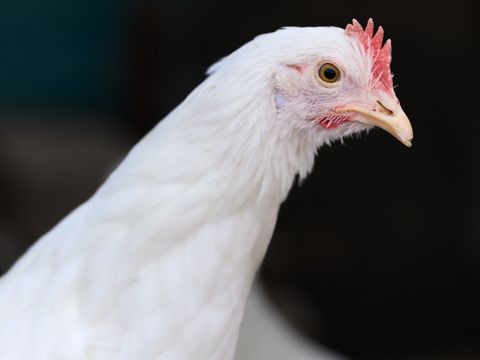
A light white-egg layer that eats less feed per egg. Chosen by farms that sell by the crate and count every pesewa of feed.

A coloured, slow-growing bird with firm, tasty meat. Hardy on free range and backyard systems, and it lays a fair number of eggs.

A strong scavenger that grows much bigger than local fowl on kitchen scraps and forage. Good for both meat and eggs in the village.

Bred in West Africa for West African conditions. Disease-tolerant, heavier than local chickens and happy on low-input feeding.

Barred Rock and black Australorp chicks for farmers who want calm, good-looking birds that lay well and still dress out heavy.

The lowest-cost way into poultry. Tough male chicks that take longer to grow but sell well live at Christmas and Easter.

Day-old guinea fowl for the northern market and for farmers who want a bird that needs little housing and fetches a premium.

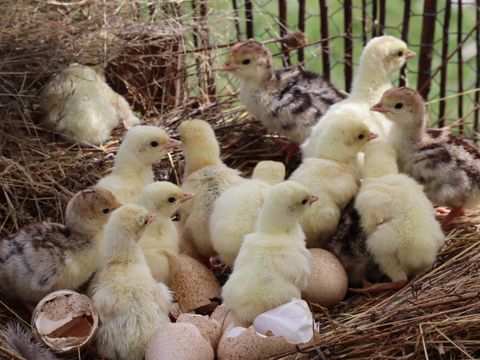
Day-old turkeys for the festive season, sold in boxes of ten. Order early: poults for December need to start by July or August.

Small birds, small space, quick returns. Quail start laying at around six to eight weeks and their eggs sell at a premium in the cities.

Market-ready live or dressed broilers, mature cocks, and point-of-lay pullets for farmers who want eggs without the brooding stage.

Fertile eggs for your own incubator, and fresh table eggs by the crate. Hatching eggs are packed blunt end up and should be set within a week.
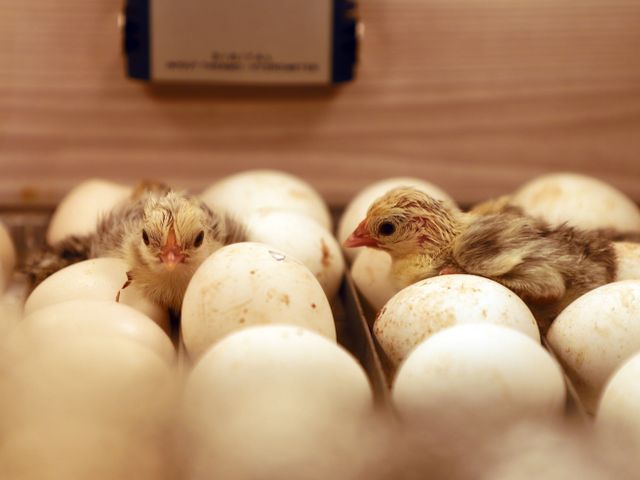
A chicken egg needs exactly three weeks of steady heat, the right humidity and regular turning. Drag the egg along the track to see what is happening inside the shell on each day.
A bright light held to the shell shows a web of blood vessels in every fertile egg. Clear eggs are taken out so the tray holds only growing chicks.


Dates and numbers come straight from the hatchery. Book early to hold yours.
Starting prices in Ghana cedis. Chick prices move with feed and import costs, so send us your order and we will confirm the exact price for your hatch date before you pay.
| Bird | Each, from | Per box, from |
|---|---|---|
| Day-old chicks · Broilers | ||
| Ross 308 Imported | GH₵ 20 | GH₵ 1,000box of 50 |
| Cobb 500 Imported | GH₵ 20 | GH₵ 1,000box of 50 |
| Day-old chicks · Layers | ||
| Hy-Line Brown Imported | GH₵ 23 | GH₵ 1,150box of 50 |
| Hy-Line White Imported | GH₵ 25.50 | GH₵ 1,275box of 50 |
| Bovans Brown Imported | GH₵ 25.50 | GH₵ 1,275box of 50 |
| Lohmann Brown Imported | Ask for today's price | |
| Day-old chicks · Dual-purpose & cockerels | ||
| Sasso Local hatch | GH₵ 13 | GH₵ 650box of 50 |
| Kuroiler Local hatch | GH₵ 11 | GH₵ 550box of 50 |
| Noiler Local hatch | GH₵ 11 | GH₵ 550box of 50 |
| Plymouth Rock / Barred Rock Local hatch | GH₵ 7 | GH₵ 350box of 50 |
| Australorp Local hatch | Ask for today's price | |
| White cockerels Local hatch | GH₵ 3 | GH₵ 150box of 50 |
| Other day-old birds | ||
| Guinea fowl keets | GH₵ 17 | GH₵ 850box of 50 |
| Turkey poults | GH₵ 65 | GH₵ 650box of 10 |
| Quail chicks | Ask for today's price | |
| Grown birds | ||
| Market-ready broiler, live (about 2.5 kg) | GH₵ 110 | – |
| Market-ready broiler, dressed | GH₵ 120 | – |
| Mature cock | GH₵ 150 | – |
| Point-of-lay pullets | Ask for today's price | |
| Eggs | ||
| Table eggs | – | GH₵ 50crate of 30 |
| Guinea fowl fertile eggs | GH₵ 10 | – |
| Chicken hatching eggs (broiler or layer) | Ask for today's price | |
These are starting prices based on what Ghanaian hatcheries and chick suppliers were charging on 2 October 2026. The price you pay is the one we confirm for your order, breed and hatch date.
Besides day-old chicks we sell table eggs, pullets, live and dressed chickens, feed, medicines and equipment, and we hatch eggs, set up farms and train farmers.
Table eggsFresh eggs by the crate
Point-of-lay pulletsYoung layers close to their first eggs
Live chickensBroilers, cockerels and old layers
Dressed chickenCleaned and ready for the kitchen
Poultry feedStarter, grower, finisher and layer mash
Vaccines and medicinesWhat to have ready, and why the vet decides
Poultry equipmentFeeders, drinkers and brooders
Egg incubatorsChoosing a machine that suits your farm
Battery cagesLayer cages and what to check
Hatching serviceBring your eggs, we hatch them
Farm setupHelp to plan and start a poultry farm
TrainingHands-on training at the farm
About the farmHalaal Farms in Opeikuma, KasoaEnter your flock size and the prices you pay. The calculator shows your feed bill, your total cost and the profit you can expect, for broilers or layers.
This is a planning estimate, not a promise. It leaves out labour, rent, transport and loan interest. See how the numbers are worked out.
What you get in the box on day one decides how many birds you sell at the end. These are the things we control so you do not have to worry about them.
Chicks leave us already protected against the diseases that wipe out young flocks in Ghana, so you can carry on with your own schedule from week one.

Our breeding lines come from Belgium, Holland and Germany, and we import foreign day-old chicks for farmers who want them.
German-built setters and hatchers hold heat and humidity steady and turn every tray automatically, batch after batch.
New to poultry? We talk you through housing, brooding, feed and vaccination before your chicks arrive, and after.
Mobile money, bank transfer or cash. You get the price in writing before any money moves.
Whether you start with one box of fifty or stock a whole poultry house, you get the same care and the same straight answers.
Book your chicksBook early. Hatches are planned around the orders we already hold, so farmers who book ahead get the date they want.
Fill in the order form or call +233 24 915 1503 with the breed, the number of chicks, your town and the date you need them.
You get the price, the hatch date and the delivery cost to your town in one message. Nothing is hidden.
Your chicks are hatched, sorted, vaccinated and packed in ventilated boxes on the day they travel.
Collect from the farm in Opeikuma, Kasoa, or have the boxes sent to you anywhere in Ghana.
Day-old chicks travel well in their first 48 hours because they are still living on the yolk they absorbed before hatching. We pack them in ventilated boxes and send them out the same day.
Delivery cost depends on your town. We tell you the cost before you pay. Chicks that arrive dead are replaced free in the next hatch.
| Region | Delivery, from | Usual time |
|---|
Most chick losses happen in the first days and nearly always come down to cold, thirst or wet litter. Keep the brooder at these temperatures and watch how the chicks spread out.
Warm the brooder for a few hours before the chicks arrive. Give water first, then starter feed.
Widen the brooder ring. Chicks huddled under the heat are cold; chicks pressed to the edge are too hot.
Feathers are coming through. Add fresh, dry litter and more drinkers as the birds grow.
Most birds can now manage without extra heat in the daytime. Keep draughts off them at night.
Boxes travel from our hatchery in Kasoa to a station in your city, or you collect at the farm. Open your city to see the distance, the usual journey time and advice for your local climate.
Practical articles on chicks, brooding, feed, health, housing and selling. Free to read.
A ten-step roadmap for a first poultry farm in Ghana, from finding buyers to selling the first batch, with a wall countdown and links to the detailed guide for each step.
A ten-minute inspection you can do at the hatchery gate or the bus station: which chicks to pull from the box, what to look at on each one, and which faults are grounds to refuse the batch.
A diagnostic guide to first-week chick deaths. Use the day, the place and the look of each dead chick to tell chilling from overheating, starve-outs, navel infection, piling and weak chicks, then fix the cause.
Feed cost per kilo of broiler depends on how much feed each kilo takes and what you pay for it. These ten habits lower both without starving the birds or buying additives.
Work through the causes of an egg drop in the order they most often occur, starting with water and feed, and learn the signs that separate a management fault from disease, moult, age, theft or heat.
Broilers need a short programme built around Newcastle and Gumboro. Layers need those plus a long list of boosters before the first egg. See example timings, the reasons behind them and the records to keep.
Words from farmers who have raised our chicks.
Cannot see your question? Call or message us and a person from the farm will answer.
Fill in the order form on this page or call +233 24 915 1503. Tell us the breed, how many chicks, your town and when you need them. We come back with the price, hatch date and delivery cost, and book your chicks once you confirm.
Yes. Our chicks are vaccinated at the hatchery against Marek's disease, Newcastle disease, Gumboro, infectious bronchitis and coccidiosis. Ask us what your batch has had so you can plan the boosters.
Yes, we deliver to all 16 regions of Ghana. The delivery cost depends on your town and the size of the order, and we tell you the cost before you pay. You can also collect from the farm in Opeikuma, Kasoa.
Day-old chick prices in Ghana change with feed costs, import costs and the season. The list shows current starting prices. Your exact price is confirmed for your breed, quantity and hatch date when you order.
Local-hatch chicks are hatched in our own incubators in Kasoa from European parent stock, so they reach you within hours of hatching. Imported chicks are flown in as day-olds from overseas hatcheries for farmers who want a specific foreign strain.
The minimum order is one box of 50 day-old chicks.
Chicks that arrive dead are replaced free in the next hatch. Count your chicks when the boxes arrive and let us know straight away.
Yes. You are welcome to see the incubators and collect your chicks in Opeikuma, Kasoa. Visits are by appointment, so call 024 915 1503 before you come.
We accept mobile money, bank transfer and cash. You always get the price in writing before paying.
Yes. We give free advice on which bird suits your goal, how to set up a brooder, and what to feed. Tell us how much space and budget you have and we will suggest a starting number.
Send the form and we contact you with the price, the next hatch date and the delivery cost to your town. The minimum order is one box of 50 chicks. No payment is taken on this website.
We will contact you on the number you gave to confirm the price, the hatch date and the delivery cost.