
The road is not what makes Takoradi hard for chicks. Our hatchery at Opeikuma, Kasoa, is about 195 km east of the twin city along the coastal highway, and a bus covers that in three and a half to four and a half hours, well inside what a day-old chick can manage. The hard part starts after you collect them. Sekondi-Takoradi has an average relative humidity of 86 per cent, and in that air a brooder floor turns wet unless you work at it.
So the journey gets a short section here and the damp gets a long one, because that is what a farmer in the Western Region needs settled before paying for chicks.
Kasoa to Takoradi: 195 km past Cape Coast and the Pra
From Kasoa the vehicle heads west on the Accra to Takoradi highway: through Mankessim, past Cape Coast and Elmina, across the Pra river at Beposo, then past the Shama junction and Inchaban into the city. A private car needs a little over three hours. By bus or cargo vehicle, with halts to load and set down, allow three and a half to four and a half.
Your boxes travel as cargo on a bus or goods vehicle, and you meet them at a station in the city. Sekondi and Takoradi are about 9 km apart, so say which side you farm on when the station is being agreed. What delivery costs varies by town, and you are told the figure before you pay. How dispatch works for every region is set out on the page about day-old chick delivery across Ghana.
The day your chicks travel, step by step
- The day before. Litter down, heat source tested, drinkers and feed trays in place. Confirm the station and the expected arrival time with us by phone.
- Dispatch. The chicks are counted into ventilated boxes of 50 and handed to the vehicle. Phone us to confirm that it has left and when it is expected.
- Two hours before arrival. Light the brooder early enough for the litter itself to warm through, since chicks sit on the floor and not in the air above it.
- At the station. Be there first. A vehicle that leaves Kasoa in the morning reaches Takoradi around the hottest part of the day, so stand the boxes in shade with space between them. Do not leave them in a taxi boot while you do something else in town.
- Count. Open each box before you leave the station. Our policy is to replace dead-on-arrival chicks free in the next hatch, and it rests on a prompt report, so phone us from the station.
- Home. Water first, then feed. The article on the first 24 hours after chicks arrive takes it from there.
If you would rather keep the boxes out of the midday sun altogether, ask whether a very early or a late-afternoon departure is possible for your hatch date.
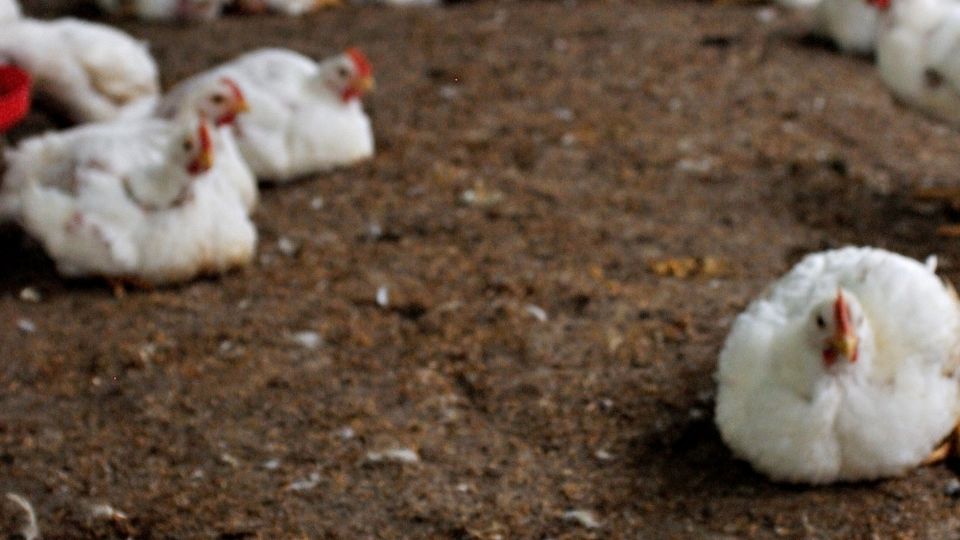
86 per cent humidity: why Takoradi litter turns wet
The south-west corner of Ghana is the wettest part of the country, and Takoradi sits at its drier eastern edge. The city's climate record shows about 1,322 mm of rain a year; Axim, 64 km to the west, gets about 1,900 mm. The rainfall is not the whole story, though. Humidity averages 86 per cent over the year, is highest in August and lowest in December.
Wood shavings take up moisture from the air as well as from droppings and spilt water. In air that is already nearly full of water, almost nothing evaporates from the floor. The litter cakes, ammonia rises to chick height, feet and breasts get burnt, and coccidiosis, which does well in damp litter, finds the conditions it likes. If you see bloody or unusual droppings, call your vet or the district veterinary office; do not guess at a treatment.
| Months | Average rain in Takoradi | What it means in the brooder |
|---|---|---|
| December to February | About 30 to 35 mm a month | The driest air of the year and the easiest time to brood. Nights can be cooler, so watch for huddling before dawn. |
| March and April | 79 mm, then 115 mm | Rains building. Buy and bag your shavings now, while they can still be dried in the sun. |
| May and June | 250 mm, then 346 mm | Close to half the year's rain in two months. Driving rain, leaking roofs and flooded yards are the risks. |
| July to September | 120 mm, 43 mm and 57 mm | Little rain, but cool and cloudy, with humidity at its peak in August. Litter stays damp without a drop falling. |
| October and November | 138 mm, then 77 mm | The second, smaller rains. Christmas broilers are brooded in these weeks. |
Two things follow. If you are free to choose, start your first batch between December and February, when mistakes cost less. And do not be fooled by August: the sky is dry, the floor is not, and chicks want heat for longer than in March.
Building and bedding for a wet coast
- Floor. A concrete floor raised above the surrounding ground, with a drain around the house. If water stands on a plot after a June storm, do not build there.
- Roof. A wide overhang, so that rain blown in from the sea side does not reach the litter through the mesh.
- Curtains. Close them from the bottom up and leave a gap at the top, even in rain. A house shut tight gets wetter, because the birds' own breath and droppings have nowhere to go.
- Litter. Start with a deep, dry layer and keep spare shavings bagged under a roof. Turn the litter daily, lift out caked patches around the drinkers and top up with dry material.
- Drinkers. Raise them as the chicks grow and fix any that drip. A single leaking drinker can ruin a square metre of floor overnight.
- Heat. In this climate the heat source does two jobs: it warms the chicks and it dries the air around them. In August it earns its fuel for the second reason as much as the first.
- Space. Give the birds more floor per head in the wet months. Fewer birds means less water going into the same litter.
We cover these points in full in keeping the floor dry from day one and brooding in the rainy season.
Port, oil and Christmas masquerades: who buys poultry here
Takoradi has had a deepwater port since 1928 and has been called the Oil City since offshore oil arrived around 2010. Around those two sit shipping and oil-service firms, hotels and guest houses, canteens and caterers, and the students of Takoradi Technical University. Market Circle, the city's main market, has been under redevelopment, with traders working from a temporary market, so ask egg and live-bird traders where they now sell before you plan a delivery round.
What this suggests, as reasoning from the kind of city it is, not as sales figures:
- Caterers and hotel kitchens want dressed broilers of even size, in the same number on the same day. That favours Ross 308 or Cobb 500 (broiler chicks start from GH₵ 20 each) raised in staggered batches over one large batch a year.
- Frozen imported chicken is cheap and comes through the ports, so a local broiler sells on freshness and on the live-bird trade, not on price alone.
- Fish is the daily protein in a coastal city with a large fishing trade. Chicken is the treat, and treats peak at Christmas.
- Christmas here means the Ankos masquerade carnival, usually 24 to 26 December, when the city fills with visitors. Chicks for that market should arrive from late October to early November, and our guide to ordering for festive sales explains why to book well before then.
For egg production, layer chicks start from GH₵ 23. For households that want a hardier bird, the dual-purpose breeds start from GH₵ 13 for Sasso and GH₵ 11 for Kuroiler and Noiler. We last checked these figures on 2 October 2026 and they move, so rely on the price list or on our reply to your form.
Feed in a harbour city's air
The Western Region grows tree crops (cocoa, rubber, oil palm, coconut) far more than grain, so the maize in a Takoradi feed bag has usually travelled. That is reasoning, but it explains why feed here tends to cost more to land than in a maize district, and why we give a feed price only when you ask: it moves with maize, soya and haulage.
Storage matters more than the purchase. In May and June, buy little and often. Keep bags on pallets, off the wall, in a room that rain cannot reach, and finish one delivery before opening the next. Feed that has clumped or smells of mould should go back to the seller, not into the feeder.
From Shama to Axim: towns that collect in the twin city
- Sekondi, Essikado and Kojokrom are part of the same built-up area, all within about 10 km of central Takoradi.
- Shama is about 20 km east. The vehicle passes the Shama junction before it reaches the city, so mention it when you order.
- Daboase is inland, roughly 30 km to the north-east.
- Apowa is about 12 km west and Agona Nkwanta about 28 km, where the road to the mining towns turns north. Farmers beyond that turn should read the Tarkwa page.
- Axim is 64 km west, about an hour further, and wetter still. Everything said above about litter applies there with more force.
What is confirmed before a Takoradi order is paid for
Fill in the order form with the birds you want, how many boxes (the minimum is one box of 50), and whether Sekondi, Takoradi or a town further west suits you. We come back with four things: the price, the hatch date, the delivery cost and the station. Only when you are satisfied with all four do you pay, and you choose between cash, mobile money and a bank transfer. The website is for enquiries; it charges nothing.
Each batch gets its hatchery vaccinations at Opeikuma before boxing. Find out from us which ones, and show the list to your vet, who sets the programme from there. If you want to talk an order through first, ring 024 915 1503.
Questions from Takoradi
How long are chicks on the road between Kasoa and Takoradi?
The distance is about 195 km on the coastal highway through Cape Coast. A car needs a little over three hours and a bus or cargo vehicle with stops usually takes three and a half to four and a half. That is well within what a day-old chick can handle, provided the boxes stay shaded and aired and you are at the station on time.
Which months are hardest for brooding chicks in Takoradi?
May and June. The city averages about 250 mm of rain in May and 346 mm in June, close to half the year's total in two months. August is the other awkward month: little rain falls, but humidity is at its highest and the air is cool, so litter stays damp and chicks need heat for longer.
Why does my litter stay wet in Takoradi even when it has not rained?
Because the air is already loaded. Sekondi-Takoradi averages 86 per cent relative humidity, so shavings take up moisture from the air as well as from droppings and spilt water, and very little evaporates. Deep dry litter, raised drinkers that do not leak, daily turning and a gap for damp air to escape are what keep a floor dry here.
I farm near Agona Nkwanta or Axim. Can I collect in Takoradi?
Yes. Agona Nkwanta is about 28 km west of Takoradi and Axim about 64 km, roughly an hour further. Tell us your town when you order so the station and arrival time can be chosen with that extra leg in mind, and carry the boxes with shade and moving air for the onward drive.
When should broiler chicks arrive for Christmas sales in Takoradi?
Broilers are usually ready six to eight weeks after they arrive, so chicks received from late October to early November are in time for the Ankos masquerade days of 24 to 26 December. That brooding period falls in the second rains, so prepare dry litter in advance, and send the order form early.