
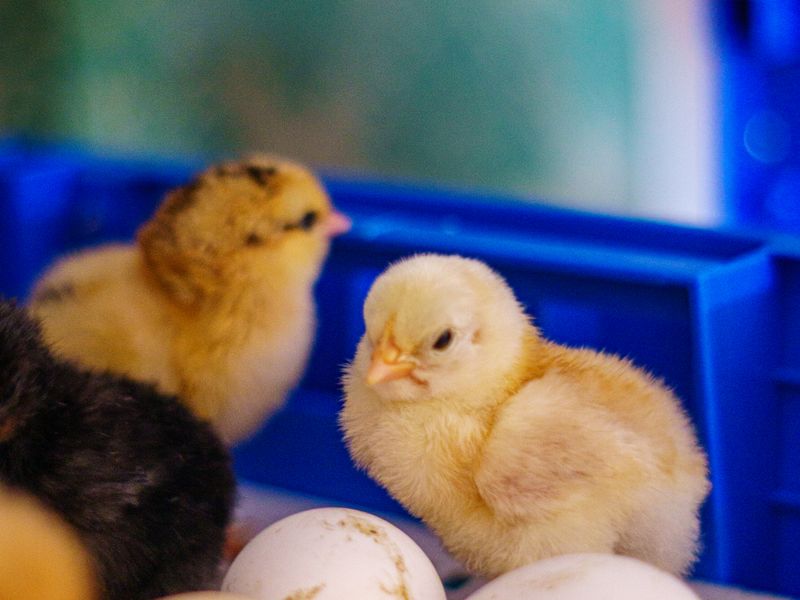
One box of 50 chicks can often be found a place in a coming hatch. Forty boxes for one poultry house on one morning cannot be found. They have to be planned. This page is for buyers who need chicks in that kind of number: commercial farms, out-grower schemes, NGOs and development projects, agro-dealers and resellers. Halaal Farms Ghana supplies them from our hatchery at Opeikuma, Kasoa, and the rule is simple: large orders are quoted and booked ahead.
What follows explains how to book, how to split a large order across dates, the paperwork a project officer can ask for and what we need from you to quote.
Why a large order is planned before the eggs are set
Chicks are committed three weeks before they exist. Eggs go into the incubator against the orders a hatchery expects, and 21 days later the chicks must leave, because they cannot be held. A large order that arrives after the eggs are set can only be met from whatever in that hatch is still unbooked.
So the earlier a large order is agreed, the more exactly it can be met: the full number, one strain, one hatch date. A little over three weeks is the practical minimum. A month or more is better, and before Christmas and Easter, when farms all over the country stock together, earlier still. Our guide on when to order chicks for the festive seasons shows how to count back from a sale date. For how hatch dates work in general, see the page on buying direct from our hatchery.
What to send us for a quotation
A useful quotation needs facts, not a round figure. Send these through the order form, by email to support@halaalfarmsghana.com or by phone on 024 915 1503:
- The bird and the strain. For example Cobb 500 broilers or Lohmann Brown layers. If you have no preference, say what the birds are for.
- The number, in boxes of 50. And the size of each house the chicks are going into.
- The date or dates. One delivery, or a series. Say how much each date can move.
- The destination. Each town, and whether you will collect at the farm or want the boxes sent to a station.
- The receiver. A name and phone number for the person who will collect and count at each place.
- Your paperwork and payment process. Whether you need a formal quotation for approval, who signs, and how long approval normally takes.
We reply with the price, the hatch dates we can offer and the delivery cost. If the full number cannot come from one hatch, we tell you at this stage, so you can plan around it.
One age and one source in each house
The most useful rule for a large flock costs nothing: every bird in a house should have hatched on the same day and come from the same supplier. Older birds carry infections that younger ones have not yet met. Chicks of mixed ages need different temperatures, different feed and vaccines on different days, and in one air space none of them gets what it needs. Mixed sources bring mixed vaccination histories.
In practice this decides how you write the order:
- Order by house. A house of 200 square metres takes about 2,000 broilers at 10 per square metre, which is 40 boxes on one hatch date.
- Do not half-fill and top up. Twenty boxes this week and twenty more a fortnight later into the same house gives you two ages under one roof.
- Do not make up numbers from elsewhere. If a hatch falls short of a full house, it is safer to run that house lighter than to add chicks from a second source.
- Fill one house completely before starting the next.
The reasoning, and how to plan the rest period between flocks, is in our article on all-in, all-out production.
Staggered deliveries and standing orders
A farm that sells to regular buyers does not want 8,000 broilers ready in the same week. It wants a house ready at a steady interval. That is done by staggering the hatch dates. Here is an example only, for a farm with four broiler houses, birds sold at about six weeks and two weeks allowed to clear, clean and rest each house:
| House | Chicks placed | Sold from about | Next chicks placed |
|---|---|---|---|
| A | Week 1 | Week 7 | Week 9 |
| B | Week 3 | Week 9 | Week 11 |
| C | Week 5 | Week 11 | Week 13 |
| D | Week 7 | Week 13 | Week 15 |
In this example the farm needs one house-load of chicks every two weeks and has birds to sell every two weeks. A standing order is that list written down: the hatch dates and the number of boxes on each, agreed with us ahead, and confirmed again before each dispatch. If your sales slow down or a house is not ready, tell us early so a date can be changed before eggs are set for it.
Egg farms use the same idea over a longer period. Pullets start laying at about 18 to 20 weeks, so the day-old chicks that will replace an ageing flock should be booked around five months before you want their eggs. For out-grower schemes there is a further benefit in giving every farmer chicks from the same hatch. When all the flocks are the same age and source, differences in results come from management, and you can see which farmers need help.
Projects and NGOs: paperwork, timing and the handover to farmers
Project buying has its own needs, and it helps to state them at the start.
Documents
We give a quotation for the birds, numbers and dates you ask for, and written confirmation of the order once it is agreed. If your donor or accounts office requires more, for instance the vaccination given at the hatchery stated in writing, or a count signed on collection, ask at the beginning and we will tell you what we can provide.
Timing
A quoted price belongs to a hatch date, and chicks cannot wait while a payment request moves through approvals. Start the quotation early and tell us honestly how long your approvals take. It is better to book a later hatch that your process can reach than an early one it will miss.
The handover
Day-old chicks handed to households that have no warm brooder die in numbers, however good the chicks were. Many poultry projects therefore brood the chicks at one prepared site for the first four weeks or so and hand out sturdier young birds. If chicks are to go straight to beneficiaries, check every brooder before the hatch date, not after. For village and backyard schemes, the hardier coloured birds on our Sasso, Kuroiler and Noiler page usually fit better than commercial broilers. We also offer training for farmers, with topics and timing agreed with you.
Inform the district veterinary office where the birds will be kept. They set the vaccination programme for the area, and when a disease such as avian influenza is reported they can restrict the movement of live birds, so it is worth checking with them before a large dispatch.
Agro-dealers and resellers: chicks cannot wait on a shelf
Feed, drinkers and vaccines can sit in a shop. Chicks cannot. A reseller who collects boxes hoping to find buyers during the week will be selling older, weaker chicks by the third day. The method that works is the reverse:
- Take your customers' orders first, with the bird and the number each wants.
- Book the total with us for one hatch date.
- Tell your customers the day, so their brooders are warm.
- Collect or receive the boxes, count them, and hand them over the same day.
Pass on what we tell you: the strain, the hatch date and what the chicks were vaccinated against at the hatchery. Keep the chicks in their own ventilated boxes of 50. Tipping them into ordinary cartons to sell in smaller lots is how chicks overheat and suffocate. Your price is quoted for the number and the date, like any other large order.
Moving and receiving many boxes
You can collect at the farm in Opeikuma by appointment, or we put the boxes on a bus or cargo transport to a station agreed with you, where your receiver collects them. Delivery cost depends on the town and is confirmed before you pay. The delivery page explains how distance changes the plan.
If you send your own vehicle for a large collection, the load needs moving air and shade. A sealed van and an open pickup in the midday sun are both dangerous. Leave gaps between stacks so the side holes stay clear, tie the stacks so they cannot slide, and travel in the cool of the night or early morning. Our guide to transporting day-old chicks safely covers stacking and stops.
At the receiving end: have enough people to unload quickly, a warm brooding area divided into several rings, and water and feed already out. Count box by box as the chicks are placed and note any dead on arrival against the box. Report straight away: chicks that arrive dead are replaced free in the next hatch.
Feed must be on the farm before the chicks. A broiler eats about 4 kg from day-old to market, so 2,000 broilers need about 8,000 kg over the cycle, which is 160 bags of 50 kg. We sell poultry feed as well, and can quote it with the chicks. Start one record sheet for each house on day one, with the hatch date, strain, number received and vaccines given. Our article on poultry records has layouts you can copy.
How large orders are priced and paid for
The price list shows starting prices, for example broiler chicks from GH₵ 20 and layer chicks from GH₵ 23 at our check on 2 October 2026. Those are starting points. A large order is quoted on its own, because the price depends on the bird, the number of boxes, the hatch date and the destination. We do not state a discount in advance, and you should compare suppliers on the written quotation, not on a figure given over the phone.
Payment is by cash, mobile money or bank transfer, and only after the price, the hatch dates and the delivery cost have been confirmed. No payment is taken on the website. Ask for the payment terms to be written on the quotation so that both sides are working from the same document. When you are ready, send the details through the order form and we will reply with a quotation.
Questions buyers ask
How far ahead must a bulk order of day-old chicks be booked?
Incubation takes 21 days, so a large order has to be agreed before the eggs are set. A little over three weeks is the practical minimum, and a month or more is safer. Before the Christmas and Easter stocking periods, book earlier still. If your date is close, ask anyway, because we can tell you what the nearest hatches still have free.
Do you give a discount for large orders of day-old chicks?
We do not publish a discount table. Large orders are quoted one by one, because the price depends on the bird, the number of boxes, the hatch date and where the chicks are going. Send us those details and we reply with a quotation. The price, the hatch dates and the delivery cost are all confirmed before you pay.
Can a large order be delivered in several batches?
Yes, and for most farms it should be. Tell us how many boxes you want on each date and we plan them as separate hatch dates, so every house receives chicks of a single age. A standing order is simply that list of dates and box numbers agreed ahead. Each delivery is confirmed with you again before dispatch.
Can you give a quotation and written confirmation for an NGO or project?
Yes. We provide a quotation for the birds, numbers and dates you ask for, and written confirmation of the order once it is agreed. If your donor or accounts office needs anything further, such as particular wording, a receipt format or the vaccination details in writing, tell us at the start so we can say what we are able to provide.
How many boxes of chicks do I need for my poultry house?
Work from floor area. In an open-sided house on deep litter, plan about 10 broilers per square metre, so a house of 200 square metres takes about 2,000 broilers, which is 40 boxes of 50. Layers on deep litter need more room, about 5 to 6 hens per square metre. Order for the house, not for the budget.
Can one bulk order be sent to several towns?
Tell us each town, the number of boxes for it and the name and phone number of the person who will collect. Boxes travel by bus or cargo transport to a station agreed for each town, and the delivery cost depends on the town, so we confirm what can be arranged and the cost for each place before you pay.