
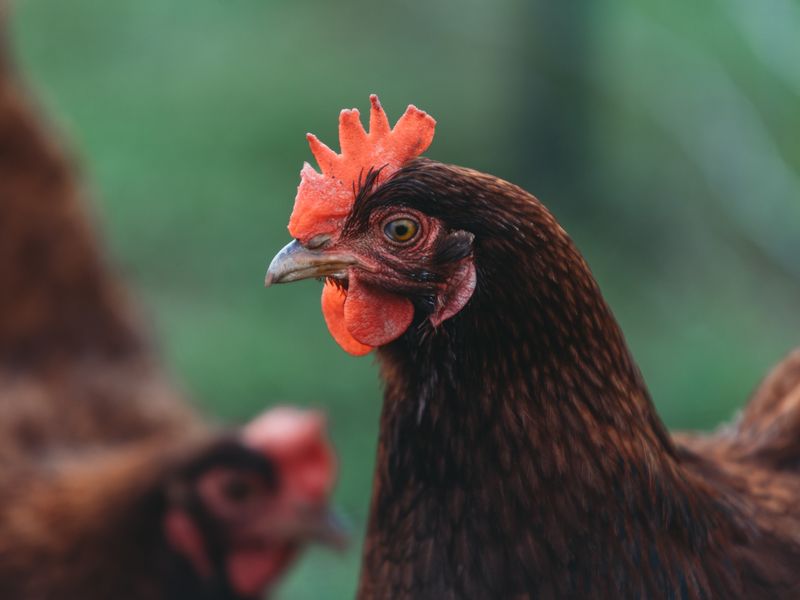
A point-of-lay pullet is a young hen that has finished growing and is a few weeks from her first egg, usually at 16 to 18 weeks of age. Someone else has carried her through brooding, about four months of feed and a series of vaccinations. You pay for that work in the price, and in return your eggs begin within weeks instead of after five months. Halaal Farms sells point-of-lay pullets from its farm at Opeikuma, Kasoa. This page explains what you are buying, how to judge a pullet, what to ask, and how to move and settle the birds so that the money you spent turns into eggs.
What "point of lay" means in weeks
The term is used loosely in Ghana. Some sellers call a bird of 12 or 14 weeks "point of lay", and a bird that age still has a month or more of eating to do before she lays. The honest meaning is a pullet of about 16 to 18 weeks that is close to laying but has not started. So the first thing to ask any seller is the hatch date, and to count the weeks yourself.
Buying just before lay, not after it, is deliberate. Moving house is a shock to a hen. A pullet moved at 16 or 17 weeks has time to settle, learn where water and feed are, and then start laying in her new home. A hen moved after she has begun to lay often stops for a while. A seller offering birds "already laying" is offering you a setback along with them.
Pullets or day-old chicks: what each choice asks of you
| Point-of-lay pullets | Day-old layer chicks | |
|---|---|---|
| Time to first eggs | A few weeks | About four and a half to five months |
| Cash at the start | High per bird | Low per bird, then feed bills for months with no income |
| Who carries brooding and rearing losses | The rearer | You |
| Skill needed | Managing laying hens | Brooding, rearing, vaccinating and managing laying hens |
| Housing needed | A laying house or cages | A brooding and rearing house as well |
| Control over how the bird was raised | None, so the record and your own inspection matter | Full |
Pullets make sense if you are new and do not want to risk brooding, if your laying house is ready and standing empty, if you need eggs flowing before a loan repayment starts, or if you are topping up a house. Day-old chicks make sense if you have rearing space and experience and want to control the bird's whole life. If that is you, see our layer day-old chicks, and read rearing pullets from day-old to point of lay before you decide.
What a good pullet looks like in the hand
Do not judge a flock from the gate. Pick birds up, and pick them from the middle and the far corners of the pen as well as from the front.
- Weight. For the common brown strains, breeder targets run from roughly 1.3 kg at 16 weeks to about 1.5 kg at 18 weeks, with about 1.4 kg at 17 weeks. White strains are lighter. A pullet well under target comes into lay late and lays small eggs for longer.
- Uniformity. This is the mark of a well-reared flock. The birds should look like one size. When some are large and many are small, the small ones were pushed off the feeders, and they will start late and lay less. Ask whether the flock was sample-weighed and how even it was.
- Comb and wattles. At 16 weeks the comb is still small and pale pink. It grows and reddens in the last two or three weeks before the first egg. Large, bright red combs across the flock mean the birds are older than stated or already laying.
- Frame and flesh. Feel the breastbone. It should be straight, with flesh on both sides but not a thick pad of fat. Legs should be straight, strong and well coloured.
- Feathers, eyes and nostrils. Full, clean plumage. Bright, round eyes. Dry nostrils with no bubbling, sneezing or swollen faces. Clean feathers below the vent.
- Beak. Layers are usually beak-trimmed to limit pecking. A proper trim is short, even and fully healed. A beak with the lower half much longer than the upper, or cut so short that the bird struggles to pick up feed, is a fault. Our article on beak trimming in layers shows the difference.
The vaccination record belongs to the bird
By 16 weeks a pullet's protection against the main diseases has either been built or it has not, and you cannot see it by looking. Ask for the record in writing, with the name of each vaccine and the date or age it was given.
A common programme in Ghana includes Marek's disease at the hatchery, Newcastle disease and Gumboro several times in the first weeks, fowl pox during rearing, and an injected Newcastle vaccine before lay. That is an example, not a prescription. Take the record to your own vet or the district veterinary office, who will tell you what is still due and when the next Newcastle boosters should fall. Ask too whether the birds have been dewormed, and what feed they are on. If you need vaccines for the boosters, the farm also sells poultry vaccines and medicines.
What to tell us, and what to ask, when you book
Supply of pullets is not like supply of chicks. A pullet takes four months to grow, so what is on offer depends on the flocks being reared at the time. Ask well ahead, ideally before your house is finished. Give us:
- the number of pullets you want;
- the strain you prefer, or brown or white eggs if you have no preference;
- whether they are going into cages or onto deep litter;
- the date your house will be ready;
- your town.
In return, ask for the hatch date and age on collection day, the strain, the average weight, the vaccination record, whether the birds are beak-trimmed, and whether they were reared on the floor or in cages. The price is quoted then and confirmed before you pay. We do not print a figure because a pullet's price is largely the feed she has eaten, and feed cost moves through the year.
Moving day: crates, cool hours and gentle hands
Grown birds travel in plastic poultry crates, not in chick boxes and not with their legs tied. As a rough guide, a standard crate carries about ten birds of this size, fewer on a hot day. Every bird should be able to sit, with air moving through the crate.
- Load at dawn or in the evening and avoid the midday sun.
- Lift birds with a hand under the body. Carrying them by one leg or by the wings bruises them and can injure joints.
- On a pickup, leave gaps between the stacks and do not cover them with a tarpaulin that stops the air. Keep moving, because a parked load heats up quickly.
- Wash and disinfect the crates before and after. Crates that go from farm to farm carry disease.
Collection at the farm in Opeikuma is by appointment. If you are far from Kasoa, tell us where you are and we will say what transport is possible and what it costs before you pay.
The first two weeks in your laying house
Have the house cleaned, disinfected and dry before the birds arrive, with drinkers working and feed in the troughs. Put the pullets straight onto water. For the first days give the same type of feed they were reared on, and make any change gradually. Your vet may suggest vitamins in the water for a few days after the move.
Watch the water. A pullet that cannot find water will not eat, and a pullet that does not eat will not lay. In cages, walk every row twice a day for the first few days and press the nipple drinkers so the birds see water. Any bird hunched at the back of a cage should be shown the drinker.
Keep the new birds away from older flocks, with separate boots and tools if you can. Do not shorten their day: once pullets are moving towards lay, the hours of light should hold steady or increase, never fall. Our guide to lighting programmes for chicks and growing pullets explains why. Change to layer mash as the first eggs appear, because the shell needs the extra calcium. The poultry feed page covers the stages, and if you are still choosing a housing system, see battery cages for layers.
When the eggs come
For well-grown brown pullets, the breeders' guides show the first few eggs at about 18 weeks, around half the flock laying each day by 20 to 21 weeks, and peak lay from about 26 weeks. So a flock bought at 16 or 17 weeks will eat for three to five weeks before the egg trays begin to fill. Budget feed for that gap. A laying hen eats roughly 110 to 120 g a day.
The first eggs are small, and size climbs over the following two months. Those guide figures are targets, not promises. Underweight birds, hot weather, a hard journey and poor feed all push the start later and the peak lower. If lay has not begun by about 22 weeks, look at body weight, feed quality and day length, and bring in your vet.
Setting your own rearing cost against a quote
Before you decide that pullets are expensive, add up what it would cost you to produce the same bird:
- The chick. Layer chicks start from GH₵ 23 each (checked 2 October 2026; prices change).
- Feed to 17 weeks. Breeder figures for a brown pullet are about 6 kg per bird, and most farms use more. Multiply by what you pay per kilo.
- Vaccines, vitamins and vet visits.
- Brooding heat, litter, water and light.
- Labour for four months.
- Losses. Every chick that dies or is culled leaves its costs on the survivors.
- A rearing house and equipment, and four months with money going out and nothing coming in.
Set that total beside the quoted price per pullet plus transport. For a skilled farmer with a rearing house, home rearing usually wins on cash. For a beginner, one bad brooding can wipe out the saving. The poultry profit calculator lets you try your own numbers, and point-of-lay pullets or day-old chicks: the real cost comparison works through the sum in detail.
To ask what is being reared now, send the form on this page or call 024 915 1503 with the number you want, your date and your town. Nothing is paid on the website, and the price is confirmed before you pay by cash, mobile money or bank transfer.
Questions buyers ask
At what age do point-of-lay pullets start laying?
Breeder guides for the common brown strains show the first eggs at about 18 weeks, around half the flock laying each day by 20 to 21 weeks, and peak lay from about 26 weeks. Those figures assume well-grown birds and good management. Underweight pullets, heat and a rough move all delay the start, so expect a few weeks of feeding before egg sales.
How much should a point-of-lay pullet weigh?
For brown strains such as Hy-Line Brown and Lohmann Brown, the breeders' targets run from roughly 1.3 kg at 16 weeks to about 1.5 kg at 18 weeks. White strains are lighter. Ask the seller for the average weight of the flock and how even it is, because a flock of similar-sized birds matters as much as the average.
Why is there no price for pullets on the website?
A pullet's price is mostly the feed she has eaten, plus the chick, vaccines, labour and losses during rearing. Feed cost in Ghana moves through the year, and the price also depends on the birds' age and how many you want. A printed figure would soon be wrong, so we quote when you ask and confirm it before you pay.
Is it cheaper to buy point-of-lay pullets or rear day-old chicks myself?
Rearing your own usually costs less cash per bird if your brooding is good and your losses are low. It costs more if you lose chicks, waste feed or have to build a rearing house. Pullets cost more per bird but bring egg income about four months sooner and move the rearing risk to someone else. Work both sums with your own feed price.
Can pullets reared on the floor go straight into battery cages?
Yes, and most settle within days, but watch them closely at first. Birds that have only known bell drinkers have to learn nipple drinkers, and a pullet that does not find water stops eating. Ask how the flock was reared and what it drank from, check every cage row for the first few days, and keep the feed they are used to.
Do I have to collect the pullets from Kasoa myself?
Pullets can be collected at the farm in Opeikuma, Kasoa by appointment, in poultry crates and in the cool of the morning. If you are far away, tell us your town when you ask for a quote. We will tell you what transport is possible for grown birds and what it costs before you pay.