
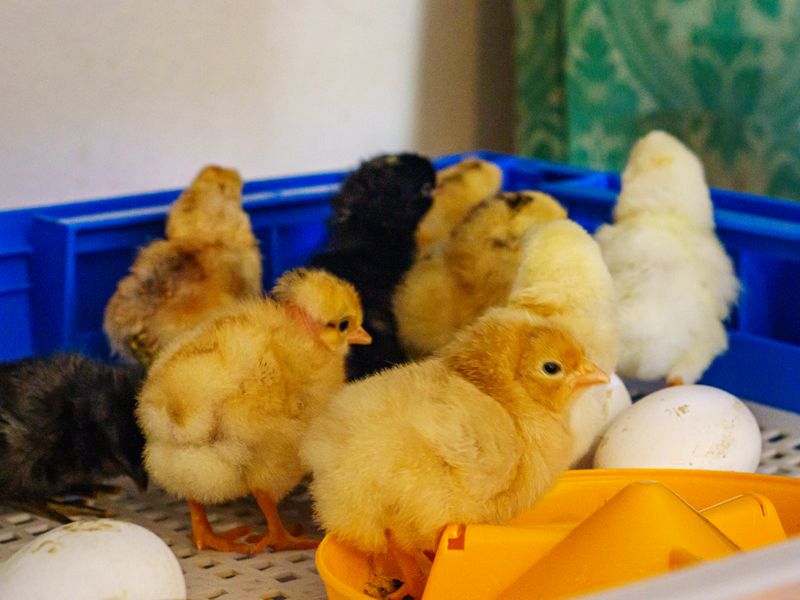
When you buy day-old chicks from a hatchery, you are dealing with the place where the chick came out of the shell. That place can tell you the day and hour of the hatch, what was given to the chicks before the lid went on the box, and when the box left. Nobody further down the chain can tell you those three things with the same certainty. Halaal Farms Ghana runs its hatchery at Opeikuma, Kasoa, in the Central Region, and sells direct to farmers in all 16 regions.
This page explains what a hatchery does for you as a buyer: how hatch dates work, how to book one, what grading and vaccination mean for the chicks in your box, and how to visit.
What changes when you buy at the hatchery door
A day-old chick is a perishable thing. It has not eaten or drunk, and it is living on what remains of its yolk. Every hand it passes through adds time in the box and one more chance for the story to change. Buying at the source shortens the chain in ways that matter to your results.
- You know the true age. A box that has been resold may be a day older than you are told. At the hatchery, the hatch date is a record, not a guess.
- The box has not been reopened and remixed. Chicks from one hatch, counted once, start more evenly than chicks topped up from another batch.
- The vaccination list comes from the people who gave it. Your vet can only plan the next vaccines if the first ones are known.
- A complaint has somewhere to go. With us, chicks that arrive dead are replaced free in the next hatch. Count the chicks when you receive them and report straight away.
- You can see the place. A seller with no address you can visit is a warning sign in the chick trade. Our article on how to avoid being cheated when buying chicks lists the others.
Hatch dates are fixed three weeks ahead, so chicks are booked
A chicken egg hatches 21 days after it goes into the incubator, and nothing shortens that. Your chicks are therefore decided on roughly three weeks before collection day, at the moment a hatchery loads eggs to match the orders it expects. Chicks cannot be stored to wait for a buyer. The ones that hatch on a given day leave on that day or very soon after.
Two things follow for you. First, a hatchery gives you a hatch date, not a shelf. Second, the earlier you book, the more likely your number is counted in when the eggs are set. Other birds take longer or shorter: guinea fowl eggs need about 26 to 28 days, turkey eggs about 28 and quail about 17 to 18, so keets and poults want even more notice.
We have kept the incubation story short here on purpose. If you want to follow the egg through the setter and hatcher stage by stage, read our walk through a commercial hatchery.
How to book a hatch date with us
Send the order form on this page or call 024 915 1503 with four things: the bird and strain you want, the number of boxes of 50, your town, and the week you want chicks in your brooder. If your date is flexible by a few days either way, say so. It widens the hatches you can be fitted into.
We then confirm the price, the hatch date and the delivery cost. You pay only after those are agreed, by cash, mobile money or bank transfer. No payment is taken on the website.
Before Christmas and Easter, farmers across the country stock at the same time, and hatches fill early. Book as far ahead as your plan allows. If your poultry house or brooder is running late, tell us as soon as you know and ask about a later hatch. Moving a date is a small problem. Receiving chicks into a cold, unfinished brooder is a large one.
Grading: which chicks belong in the box
Not every chick that hatches is fit to sell. At a hatchery, the chicks are sorted after they come out of the hatcher, and the weak, wet, deformed and those with unhealed navels are taken out. What goes into a box should look like this:
- dry, fluffy down, with no egg contents stuck to it
- standing and moving, and quick to right itself when turned on its back
- bright, open eyes
- a healed navel, clean and dry, with no black button or wet string
- legs and toes that are straight, and a vent free of droppings
- much the same size as its box mates
Size deserves a word. Chick weight follows egg weight, at roughly two-thirds of it. Young breeder hens lay smaller eggs, so their chicks are smaller too. Small and lively is acceptable, and such chicks simply want a slightly warmer start. Small, quiet and hunched is not. You can repeat all these checks in five minutes when you open your own boxes, and our guide to checking chicks before you pay explains how to sample a box.
Vaccination happens before the lid goes on
Some protection is best given at the hatchery, where every chick is in one room on one day and the vaccine can be handled correctly. The standard example is Marek's disease vaccine. It is given by injection at day-old because chicks meet that virus in poultry house dust within days, and it matters most for birds you will keep for many months, such as layers. Hatcheries also commonly give Newcastle disease and infectious bronchitis vaccines as a spray over the boxed chicks.
Chicks from Halaal Farms are vaccinated at the hatchery before they leave. Programmes differ between broilers and layers and from one hatchery to another, so do not assume. Ask us what your batch has had, write it on your flock record, and take it to your vet or district veterinary office. They set what follows on your farm. For typical patterns, see the vaccination programmes commonly used in Ghana.
From the hatcher to the box: why the first hours count
After grading and vaccination comes the count: 50 chicks to each ventilated box. The box does two jobs. Fifty small bodies warm one another, while the vents cut into the walls and lid carry off surplus heat and damp. This is why heat and stale air are bigger dangers in transit than hunger.
The chick in the box has not eaten. It is living on the yolk it drew into its body just before hatching, and that store lasts roughly two to three days. This is what allows a box to travel from Kasoa to the far north. The store is for travelling, though, not for waiting. Chicks do best when they reach warmth, water and feed as early as possible, ideally within a day or two of hatch.
Handling a chick box: keep it level, keep it in shade and moving air, and never put it in a closed car boot or leave it in a parked vehicle. Do not stack boxes so that the side holes are blocked. Do not keep opening the lid on the road. Open it at the brooder, count, and place the chicks.
Collecting at Opeikuma, or at a station in your town
Buyers close enough to drive can collect at the farm by appointment. Come in the cool of the morning if you can, with a vehicle that lets air move around the boxes, and go straight home. Kasoa traffic in the midday sun is no place for a full chick box.
For customers further away, boxes are put on a bus or cargo transport to a station in your city, and you collect them there. We agree the station with you before dispatch, and the delivery cost is confirmed before you pay. Be at the station before the vehicle is due, with the brooder already warm at home. The page on day-old chick delivery across Ghana explains how the journey is planned for near and far regions.
Visiting the hatchery by appointment
Farm visits are welcome, and the appointment is there for a reason. Poultry diseases travel on shoes, clothes, crates and car tyres, and a hatchery sends chicks to every region, so it has to be careful about who walks in and where they have been. If you keep birds at home, come in clean clothes and footwear, and make us your first poultry stop of the day, not your last.
A visit is also the best time to ask questions. Useful ones are: which hatch would my order come from, what will the chicks have been vaccinated against, how will the boxes travel to my town, and what do I do if some arrive dead. Opeikuma is a suburb of Kasoa, which lies on the road between Accra and Cape Coast. Call 024 915 1503 to agree a time and get directions.
Bringing your own eggs, and other things the hatchery does
A hatchery is useful to more than chick buyers. If you keep your own breeding birds, you can bring fertile eggs and we hatch them for a fee, which we tell you when you ask. The page on our egg hatching service explains which eggs are worth setting. If you own an incubator, we sell fertile hatching eggs.
We also import foreign day-old chicks alongside those we hatch here, and the page on imported day-old chicks explains how to buy those well. For the full range of birds and starting prices, see day-old chicks for sale in Ghana. Large farms and projects that need many boxes on fixed dates should read about bulk orders, because those are planned around hatch dates from the start.
When you know the bird and the number of boxes, send the order form. We will come back with a hatch date, a price and a delivery cost, and you decide from there.
Questions buyers ask
Why buy day-old chicks direct from a hatchery and not from a reseller?
The hatchery knows the three things that decide how chicks start: when they hatched, what they were vaccinated against and when they left. Every extra seller between the hatcher and your brooder adds hours in the box and removes some of that information. Buying direct also means a problem on arrival is reported to the people who can replace the chicks.
Do you keep day-old chicks in stock that I can collect today?
No hatchery can keep chicks in stock, because a chick is only a day-old for a day. Eggs are set about three weeks ahead against the orders expected, so most boxes in a hatch are already booked. A hatch sometimes has boxes still free, so call 024 915 1503 and ask about the next one.
Can I visit the hatchery at Opeikuma before I order?
Yes, visits are welcome by appointment. Call or send the form to agree a day and time. An appointment matters because disease travels on shoes, clothes and vehicles, so a hatchery needs to know who is coming. If you keep birds, come in clean clothes and footwear, and visit us before any other poultry farm that day.
Which vaccines do the chicks get at the hatchery?
Our chicks are vaccinated at the hatchery before they leave. What is given can differ between broilers, layers and other birds, so ask what your own batch has had when we confirm the order, and write it down. Give that list to your vet or district veterinary office, who will set the vaccines that follow on your farm.
How old are the chicks when they reach me from the hatchery?
They are boxed after hatching, grading and vaccination, and then travel. If you collect at the farm, they can be in your brooder the same day. If they go by bus or cargo to a far region, add the journey, which may run overnight. Ask us for the hatch date and time so you know exactly how long they have waited.