How to Avoid Being Cheated When Buying Day-Old Chicks in Ghana
The common chick-buying tricks in Ghana, from fake online sellers to cockerels sold as layers, with the checks and payment habits that protect your money.
Halaal Farms Ghana team4 October 2026 · 13 min read
Key points
Verify that the seller has a real hatchery or farm, by a visit or a live video call, before any money moves.
Check the registered name shown by mobile money before you confirm, and stop if it does not match the business you verified.
Brown layer pullet chicks are brown, while the cockerels of the same breeds are pale yellow, so you can check a box yourself.
Wing feathers a centimetre long, feed in the crop or dry wrinkled legs mean the chicks are not fresh day-olds.
Count, weigh and photograph chicks at handover, and raise any problem with the seller the same day.
The commonest chick fraud in Ghana follows a script. A social media page shows photos of bright yellow chicks at a price a few cedis below everyone else. A friendly person on WhatsApp says the hatch is nearly sold out and asks for half the money by mobile money to "secure your boxes". On delivery day there is a new charge, for transport or a permit. After that the number stops ringing and the page blocks you.
That is the crude version. The quieter kind of cheating involves real chicks that are not what you paid for: cockerels sold as layer pullets, leftover chicks several days old sold as fresh, or boxes that are short and mixed. This kind costs more in the end, because you feed the birds for weeks before you find out. Both kinds have signs you can check, and none of the checks needs special equipment.
How the disappearing-seller trick works
The fraudster has no chicks, no hatchery and no intention of delivering. Everything he does is designed to get one payment out of you, and then a second.
The bait. A page or advert with a low price and plenty of stock, often in a festive period when real hatcheries are fully booked. The photos are usually copied from other farms.
The hurry. You are told the hatch is tomorrow, only a few boxes remain and other buyers are waiting. The aim is to stop you from checking anything.
The deposit. Payment goes to a personal mobile money number. The name on it often does not match the business name, and there is an explanation ready: it is the accountant, the driver, the manager's wife.
The extra fee. Once you have paid, a new cost appears that must be settled before the chicks can be released. People pay it because they do not want to lose the first amount.
The silence. Calls go unanswered and the page disappears, to return under another name.
The defence is simple to state: no money moves until you have confirmed that the seller physically has a hatchery or a farm. The sections below show how.
Eight signs that a seller may have no chicks at all
The price is well below what known hatcheries are quoting. Compare it with a published list such as our day-old chick price list. Hatching costs are similar for everyone, so a large discount needs an explanation.
Unlimited stock of every breed, immediately, in the weeks when everyone else is booked.
No physical address, or only a town name. "We are in Kumasi" is not an address.
Refusal of both a visit and a live video call. Real hatcheries do restrict who enters the hatching rooms, for hygiene, but they can still meet you at the gate or office and show you the building.
Pressure to pay within the hour.
The mobile money name does not match the business or the person you are speaking to, or the number changes between messages.
New charges after you have paid.
A page that is only a few weeks old, with comments switched off or praise that comes only from accounts with no history.
One sign alone is not proof. Two or three together are enough reason to stop.
How to verify a hatchery or seller before you pay
Verification takes one or two days. A seller who cannot wait that long for your money is telling you something.
See the place
A hatchery is a building with incubators, a generator, egg trays and chick boxes. It cannot be faked on a visit. Go yourself, or send a relative or a farmer you trust who lives nearby. If the distance is too great, ask for a live video call in which the person walks from the gate to the hatchery building and shows you something that proves the call is live, such as today's date written on paper. Copied photos cannot do that. At Halaal Farms Ghana, farm visits at Opeikuma, Kasoa are welcome by appointment.
Ask questions that a real hatchery answers easily
Which breeds do you hatch, and where do the parent stock or the hatching eggs come from? Which days of the week do you hatch? Which vaccines do the chicks receive before they leave? What happens to chicks that arrive dead? A hatchery answers these in a minute, because they are its daily work. A fraudster answers vaguely or changes the subject back to payment. Our list of questions to ask a hatchery before buying explains what a good answer sounds like.
Find your own references
Phone numbers of "satisfied customers" supplied by the seller prove little, since an accomplice can play that part. Find references yourself. Ask the feed shop where you buy, your district veterinary or agricultural extension officer, and members of a local poultry farmers' group whether they know the hatchery and how its chicks performed.
Check the pictures and the page
Look at how long the page has existed and whether its older posts are about poultry. Run one or two of its photos through an image search on your phone. Photos that also appear on the sites of farms in other countries have been copied.
Start with a small order
With any new supplier, a first order of one or two boxes tests the whole chain: the answers you were given, the delivery and the chicks themselves. Our minimum order is one box of 50 chicks, which makes a first trial affordable.
Real chicks, wrong bird: cockerels sold as layers or broilers
The reason for this trick is the price gap. Male chicks of egg-laying breeds are a by-product of producing pullets, and they are cheap. Our own starting prices, checked on 2 October 2026 and subject to change, were from GH₵ 3 for white cockerels and from GH₵ 23 for layer chicks. Someone who sells cockerels at a pullet price pockets the difference, and the buyer discovers it weeks later.
Brown layers: you can check the colour
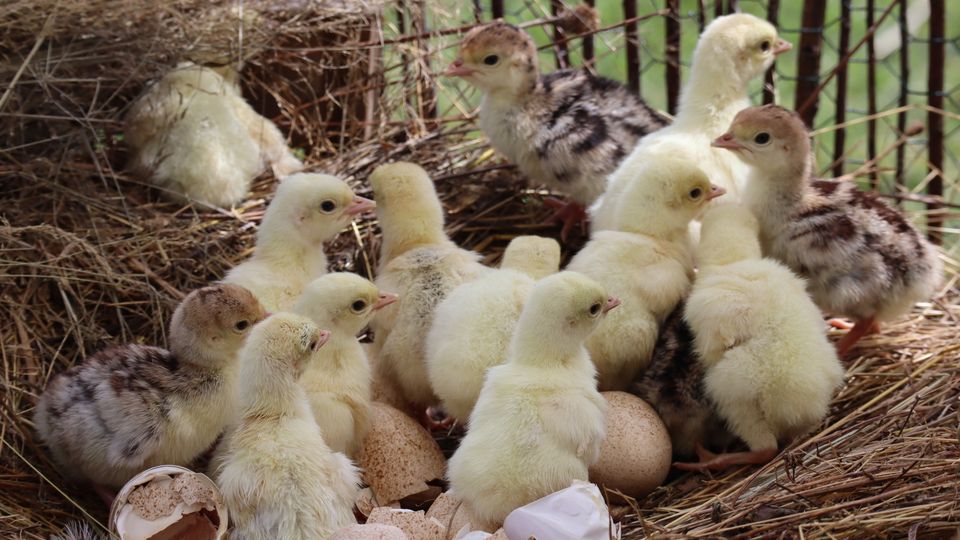
The brown-egg hybrids sold in Ghana, such as Lohmann Brown, Hy-Line Brown and Bovans Brown, are bred so that the sexes hatch in different colours. Pullet chicks are brown or reddish-buff, sometimes with darker stripes on the back. Cockerel chicks are pale yellow or white. So a box sold as brown layer pullets should be a box of brown chicks. A few pale ones can be honest sorting errors. A box that is mostly pale is not what you ordered, and the time to say so is before you accept it.
White layers: you depend on the hatchery
White-egg layer chicks all look alike to the buyer: small and yellow, male or female. They are sorted by trained staff who examine the wing feathers or the vent, and even skilled sexing leaves a small percentage of males. Because you cannot check the result yourself, buy white layers only from a hatchery you have verified, and have the words "sexed pullets" and the breed written on your receipt. How sexing is done, and what accuracy to expect, is covered in our article on how chicks are sexed.
Layer cockerels sold as broilers
Both are yellow chicks, so this one catches beginners. A broiler chick is heavier, around 40 g, with a broad body and noticeably thick shanks. A layer-type cockerel chick is lighter and slimmer, with thin legs. If you were not sure on day one, you will be by day 14. A broiler will have multiplied its weight several times and will look stocky. A layer cockerel of the same age is a small, upright, active bird about a third of that weight. Weigh a sample at one and two weeks and keep the figures. The broiler breeds we supply are described on the broiler chicks page.
Any coloured chick called Sasso
Sasso, Kuroiler and Noiler chicks are multi-coloured, and so are the chicks of ordinary local fowl and of crosses with no breeding programme behind them. At a day old, a buyer cannot tell them apart with confidence. The protection is the source. Ask where the parent stock or eggs came from, and buy from a seller who can answer.
Old chicks sold as day-olds
Chicks that were not sold on hatch day are sometimes held and offered a few days later as fresh. If they were held without feed and water, they are dehydrated and weak. If they were fed, they may be healthy, but you are paying a day-old price for birds whose first days you know nothing about, and every later date is wrong. Vaccination programmes are counted from the hatch day, so a batch that is secretly five days old will receive each vaccine at the wrong age.
What to look at
True day-old
Chick several days old
Wing tips
Short feather stubs barely beyond the down
Wing feathers a centimetre or more long, tail feathers beginning to show
Crop
Empty on arrival from the hatchery
Feed can be felt in the crop if the chicks were fed while held
Legs
Plump, smooth, slightly shiny shanks
Thin, dry, wrinkled shanks if held without water
Weight
Around 40 g for a broiler chick
Clearly heavier if fed, or light and bony if not
Box floor
A few dark, pasty first droppings
Many droppings coloured by feed
Size across the box
Even
Two distinct sizes if leftovers from two hatches were combined
Selling brooded chicks of one to four weeks old is a legitimate trade when it is declared and priced as such. The cheating lies in calling them day-olds.
Mixed grades, short counts and small chicks
Every hatch produces some chicks that a careful hatchery removes: unhealed navels, bent legs, crossed beaks, weak or undersized birds. A seller who puts those back into the boxes, or sells them cheaply to a trader who mixes them with good chicks, is passing the loss to you. The physical checks are described in our guide to judging the quality of day-old chicks. In short: bright eyes, a clean closed navel, straight legs, dry fluffy down and an even size across the box.
Short counts are the easiest trick to catch and the least often checked. Count at least one full box at handover, and all of them if the order is small. Ask in advance whether the hatchery adds extra chicks per box to cover losses on the road, so that you know what the count should be.
Small chicks need a fair judgement. Chick weight depends on egg size, and young parent flocks lay small eggs, so their chicks are lighter. Such chicks can do well with careful brooding and are not a fraud. What you are entitled to is a straight answer. If you weigh a box and the average is well under what you expected, ask about the age of the parent flock.
Agents and middlemen
Many farmers, especially far from the big hatcheries, buy through an agent who collects orders and brings chicks up on a bus or cargo vehicle. A good agent is a real service. The weak points are that your money sits with a third person, and that the agent may fill your order from whichever source is cheapest that week.
Ask the agent to name the hatchery. Then call the hatchery yourself, on a number you found independently, and confirm that the agent is known to them and that an order for your number of chicks exists. Ask for a receipt that names the hatchery, the breed and the hatch date. An agent who will not say where the chicks come from is asking you to buy blind.
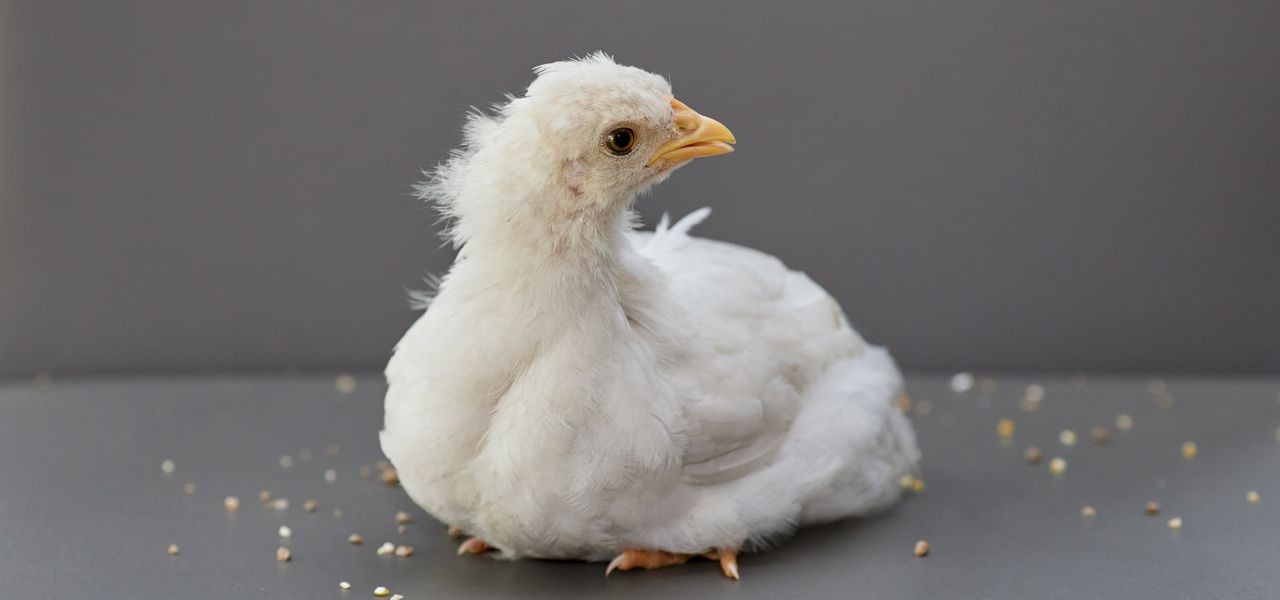
White chicks resting together.
Paying safely
Paying before delivery is normal in this trade. Hatcheries allocate chicks against confirmed orders, and few will hold boxes on a promise. So the rule is not "never pay first". The rule is to know whom you are paying and to have the deal in writing.
Get the terms in writing before you pay. A WhatsApp message is enough if it states the breed, whether the chicks are sexed pullets or unsexed, the number, the price per chick, the total, the hatch or collection date, the delivery method and cost, and what happens to chicks that arrive dead.
Read the name before you confirm. Mobile money shows the registered name of the wallet before you approve a transfer. If it is not the business or the person you verified, cancel and ask why.
Use a traceable method. Mobile money or a bank transfer leaves a record. Cash handed to a stranger at a lorry station does not. Keep the transaction ID and a screenshot.
Agree every charge at the start. A fee that appears after payment is a reason to stop, not to pay again.
Protect your wallet. No hatchery needs your PIN or a code sent to your phone. Do not approve a payment prompt you did not start, and ignore messages claiming money was sent to you by mistake.
On a first deal, shorten the gap. If you can travel, pay at the hatchery when you collect. If the chicks are coming by bus, ask for a photo of the waybill, the vehicle number and the driver's phone number as soon as they are loaded.
For comparison, this is how we handle it: the price, the hatch date and the delivery cost are confirmed before you pay, and chicks that arrive dead are replaced free in the next hatch. Expect the same clarity from any supplier.
Checks at handover, while the seller or driver is present
The moment of handover is your one chance to raise a problem with proof. Ten minutes is enough.
Lift every lid. Count dead and weak chicks and photograph them with the box label in view.
Count at least one box in full.
Weigh a full box, then the empty box later, and work out the average chick weight.
Look at colour: brown pullets should be brown, and a box should not hold two kinds of chick.
Check wing tips, crops and legs on ten chicks for the signs of age.
Write down the hatch date and the vaccines you are told the chicks have had.
Then report anything wrong to the seller the same day, in writing with the photos. A complaint made a week later is easy to dismiss. What to do with the chicks from that point on is in our plan for the first 24 hours after chicks arrive.
If you have been cheated
If the seller has vanished: stop paying, whatever new fee is demanded. Call your mobile money provider or bank immediately and report the transaction, because money that has not yet been withdrawn can sometimes be held. Report to the police with screenshots of the chats, the page, the numbers used and the transaction IDs. Report the page to the platform, and tell your farmers' group so that the same number does not catch someone else.
If the chicks are not what you paid for: keep them apart from any other birds, and keep your evidence: photos, counts, weights and the written order. Contact the seller the same day and say exactly what is wrong. Ask your district veterinary or extension officer to look at the birds and note what they find. An honest hatchery that has made a mistake will offer a replacement or a refund. Where cockerels were sold as pullets, there is no way to turn them into layers. Raise them for meat, record what they cost you and buy your next pullets elsewhere.
Not every disappointment is fraud. A few males in a sexed batch, lighter chicks from a young parent flock, or a hatch date that slips because fertility was low all happen at honest hatcheries. The difference lies in whether you are told, and in what is done about it.
If you would like to check us before ordering, call 024 915 1503 to arrange a visit, or send the order form with your questions. The layer chicks page lists the breeds we supply, and advice is free before and after an order.
Questions farmers ask
Is it safe to pay a deposit for day-old chicks before delivery?
Paying in advance is normal, because hatcheries allocate chicks against confirmed orders. It is safe when you have verified the seller, when you hold a written confirmation of breed, number, price, hatch date and delivery cost, and when the account or mobile money wallet is in the name of the business you checked. It is unsafe with a stranger you know only from a social media page.
How can I tell if my layer chicks are really pullets?
With brown-egg breeds such as Lohmann Brown, Hy-Line Brown and Bovans Brown, pullet chicks are brown or reddish and cockerel chicks are pale yellow or white, so look at the colour before you accept the box. White layer chicks all look alike and are sexed by trained staff, so there you depend on the hatchery and on a written description of what you bought.
How do I know if chicks are older than one day?
Look at the wings, the crop and the legs. A true day-old has only short feather stubs at the wing tips. Wing feathers a centimetre or more long, or tail feathers showing, mean several days of age. Feed in the crop means the chicks have been fed somewhere. Thin, dry, wrinkled shanks mean they have been held without water.
What should I do if a chick seller disappears with my money?
Stop sending money, even if new fees are demanded to release the chicks. Call your mobile money provider or bank at once and report the transaction, because funds that have not yet been withdrawn can sometimes be held. Then report to the police with screenshots of the chats, the page and the payment details, and warn other farmers in your area.
Written by the Halaal Farms Ghana team. We hatch and import day-old chicks at Opeikuma, Kasoa, and deliver to all 16 regions. This article is general guidance for farmers. For diagnosis and treatment of sick birds, speak to a vet or your district veterinary office.
A ten-minute inspection you can do at the hatchery gate or the bus station: which chicks to pull from the box, what to look at on each one, and which faults are grounds to refuse the batch.
Twelve questions to put to any hatchery or chick seller before you send money, why each one matters to your flock, and how to tell a solid answer from one that should make you cautious.
Imported and locally hatched chicks usually share the same genetics. What differs is the journey, the price drivers, the supply through the year and the antibodies they carry. Here is how to weigh them.