
Techiman is where the roads from Kumasi, Sunyani, Wa and Tamale meet, and its market is one of the largest food-crop markets in Ghana. Maize, yam, cassava, plantain and other grains change hands there by the truckload, bought by traders from all over the country and from Burkina Faso, Mali, Niger and Côte d'Ivoire. For a poultry farmer that puts the heaviest item in the budget, feed grain, almost at the farm gate. What Techiman does not have at the gate is the chick. Ours come from our hatchery at Opeikuma, Kasoa, about 380 km away by road, packed in ventilated boxes of 50.
380 km through Kumasi: the route and the hours
From Kasoa the transport joins the Accra to Kumasi road, passes through Kumasi and then runs north-west on the Kumasi to Tamale highway. Techiman is roughly 120 km beyond Kumasi on that highway, which makes the whole trip about 380 km. A private car on a clear road can do it in under six hours. A loaded bus with stops, and with Kumasi traffic in the middle, usually needs 7 to 9 hours.
That is well within what a day-old chick can manage. A newly hatched chick still carries yolk that feeds it for roughly two to three days, so hunger is not the danger on this road. Heat and stale air inside a packed vehicle are. A departure late in the day, with arrival in the cool of the early morning, is kinder to the birds than a trip through the midday sun. The station in Techiman is agreed with you before the boxes leave, so ask for the expected arrival time in the same call. The delivery cost is confirmed before you pay anything.
One local point. The market's main days are Wednesday to Friday, and on those days the roads into town and around the market fill with trucks, tricycles and loading gangs. If your chicks are due on one of those mornings, leave home earlier than you think you need to, and plan a way out of town that avoids the market area. Our guide to transporting day-old chicks safely covers how to carry the boxes on the last leg to your farm.
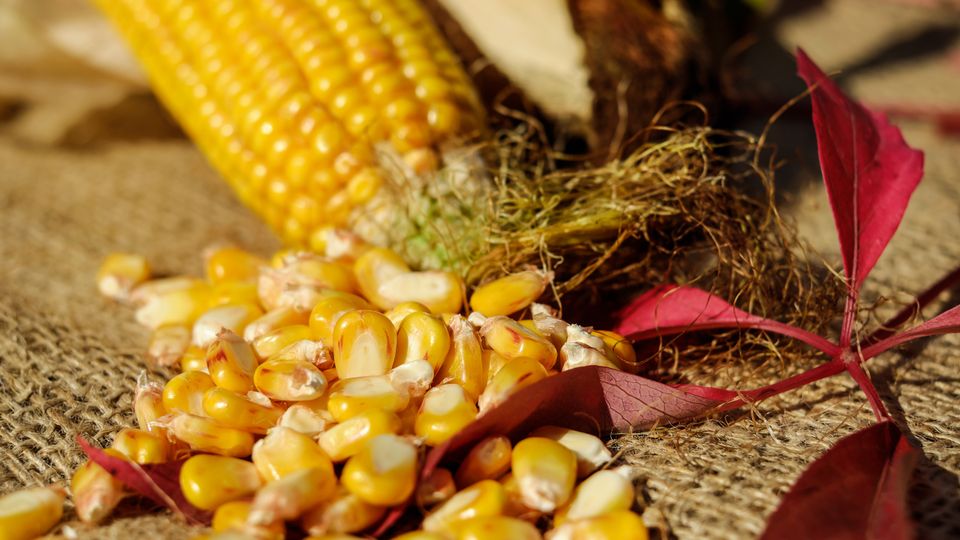
The maize market is your advantage, if you buy with care
The Techiman market began as a Wednesday to Friday market and now trades through the week, with those three days still the busiest. Maize has its own section, and by the traders' own account more than 20,000 bags can be sold there in a single week. Bono East is itself maize country, so a good share of that grain has not travelled far.
Being close to the grain does not mean the grain is always cheap. Techiman prices follow demand from the whole of West Africa. In July 2024 the maize sellers in the market warned of a shortage because buyers from Mali, Burkina Faso and Niger, paying in CFA francs, were going straight to the farms and outbidding the local trade. A poultry farmer who buys maize one bag at a time, in whatever week the feed bin runs empty, pays whatever that week's price happens to be.
To gain from living next to the market, do three things:
- Buy after harvest. In this zone the major-season maize comes in around August and September and the minor-season crop around December and January. Grain is normally cheapest in the weeks after each harvest and dearest in the lean months before the next one.
- Check dryness before paying. Dry maize is hard, rattles in the hand and breaks cleanly when bitten. Soft, dull or musty-smelling grain has been stored wet. Refuse it whatever the price.
- Store it properly. Bags go on pallets, off the floor and away from the wall, in a room that stays dry through both rainy seasons.
Our articles on buying and storing maize and soya and on aflatoxin and mouldy feed go through the checks in detail. Mould toxins hit chicks harder than adult birds, so the cheapest bag in the market can turn out to be the dearest one you ever bought.
What the market does not put in the feed trough
Maize is energy. A chick also needs protein, minerals and vitamins in the right proportions, and that part of the ration takes more care to source.
| Ingredient | Found in Techiman? | What to know |
|---|---|---|
| Maize | Yes, in quantity | Buy dry grain after harvest and store it well. |
| Soya beans | Ask the grain traders; most of Ghana's soya is grown further north | Raw soya must be properly heat-treated before birds can use it. If you cannot roast it evenly, buy soya meal. |
| Fishmeal, concentrate, premix, shell grit | From agro-input and feed dealers | Ask for the label and the mixing instructions, and follow them. |
| Chick starter | From feed dealers | Buy a formulated starter for the first weeks. Do not try to mix this one at home. |
Home mixing starts to pay once the birds are past the starter stage and the flock is large enough to justify buying ingredients in bulk. Before then, a wrongly balanced mix costs more in slow growth than it saves. Read what mixing your own poultry feed really takes before you buy a single ingredient. We also sell starter, grower, finisher and layer feed at the farm. The price is given when you ask, because it moves with maize and soya.
Two rains and a dusty December in the brooder
Techiman lies in the transition zone, with forest country to the south of the municipality and savannah to the north. It has two wet seasons, the major one from about April to July and a shorter one in September and October, with something like 1,260 to 1,660 mm of rain in a year. From December into January the harmattan reaches the town and the air turns dry and dusty.
Each season asks for something different. In the rains, the job is keeping litter dry: roof overhangs, a raised floor and curtains on the windward side that still leave a gap at the top for air. In the harmattan the afternoons are hot and the hours before dawn are cold, so chicks that looked comfortable at sunset can be piled on each other by 4 a.m. Dust also irritates their airways and dries out open drinkers faster than you expect.
A box of chicks that comes off the transport at daybreak in December arrives in the coldest hour of the day, so light the brooder heat the evening before and have it steady when you leave for the station. The chick brooding guide gives temperatures and layout week by week.
Who buys eggs and chicken in a junction town
What follows is reasoning from the kind of town Techiman is, not sales figures. Three market days a week bring in thousands of traders, drivers and loaders who eat in chop bars and at roadside tables. The highway to Tamale and the north brings travellers through every day. Since 2019 the town has also been the capital of Bono East Region, with the offices, guest houses and hotels that come with that. All of them use eggs daily and chicken often, and market women who come in from the villages are natural buyers of eggs by the crate to take home and resell.
That points first to layers. A laying hen eats for well over a year, so the farmer who can buy and store grain cheaply has an edge that lasts the life of the flock. We supply Hy-Line Brown, Hy-Line White, Lohmann Brown and Bovans Brown layer chicks from GH₵ 23 each.
Broiler chicks (Ross 308 and Cobb 500) start from GH₵ 20 and suit farmers who already have chop bar or cold store buyers, or who are timing a batch for Christmas or Easter. For the farming villages around the town, where birds are let out to scratch, Sasso from GH₵ 13 and Kuroiler or Noiler from GH₵ 11 are the hardier choice. These starting prices were checked on 2 October 2026 and they change, so confirm on the price list or by asking us.
Nkoranza, Wenchi, Kintampo and the villages between
Nkoranza to the east and Wenchi to the north-west are each about 30 km from Techiman. Kintampo is about 60 km north on the Tamale highway. Tuobodom lies on that same road a short way out of town, Tanoso is on the Kumasi side, and Offuman is off to the north-west. Farmers in all of these can travel in and collect at the Techiman station, and the short return trip is easy on the chicks if the boxes are kept shaded and the vehicle is not sealed shut.
If you farm in Kintampo or Wenchi, say so when you order. Transport going on towards Tamale or Wa passes through Techiman first, so it may be possible to agree a station nearer to you. Farmers on the Sunyani side should read the page on day-old chicks for Sunyani, which is about 65 km west of Techiman.
Sending your order from Techiman
Fill in the order form on this page with the breed, the number of boxes (one box of 50 chicks is the minimum) and the week you want them, or call 024 915 1503. We reply with the price, the hatch date, the vaccinations that batch will have had at the hatchery and the delivery cost to the station agreed with you. Nothing is paid through the website. Once you have confirmed, payment is by mobile money, bank transfer or cash. If you would rather see the birds first, visits to the farm at Opeikuma are welcome by appointment, and advice before and after the order is free.
Questions from Techiman
How long do day-old chicks take to reach Techiman from Kasoa?
The road distance is about 380 km, through Kumasi and then up the Kumasi to Tamale highway. A bus or cargo vehicle usually needs 7 to 9 hours, depending mostly on traffic in and around Kumasi. The station is agreed with you before dispatch. Ask for the departure time as well, so that you can be waiting when the boxes come off.
Can I feed day-old chicks on maize bought in the Techiman market?
Not on maize alone. Maize gives energy but too little protein, and a chick needs a balanced starter feed for its first weeks. Use market maize later, as the grain part of a grower or layer ration mixed with a protein source and a premix. Buy only dry, clean grain, because mouldy maize harms young birds first.
Should I avoid collecting chicks on a Techiman market day?
You do not have to, but plan for it. Wednesday to Friday are the main market days and the roads near the market fill with trucks and loading gangs. Leave home early, agree a station you can reach without crossing the market area, and take the boxes straight to the brooder. A box that waits in a hot queue is the real risk.
Can the boxes be dropped at Kintampo or Wenchi instead of Techiman?
Tell us where you farm when you order. Kintampo is about 60 km further north on the Tamale road and Wenchi about 30 km away on the road to Wa, so transport bound for those places passes Techiman first. The station is agreed with you before dispatch, and the delivery cost for that station is confirmed before you pay.
What happens if some chicks are dead when the box reaches Techiman?
Count the chicks at the station or as soon as you reach the farm, and call us on 024 915 1503 straight away with the number. Chicks that arrive dead are replaced free in the next hatch. A late report is hard to check, so do the count before the birds are mixed into the brooder.