Hands-on signs that separate laying hens from non-layers: comb, vent, pubic bones, abdomen and pigment. When to cull, what to do with culls and the feed saved.
Halaal Farms Ghana team4 October 2026 · 12 min read
Key points
A laying hen has a large, red, waxy comb, a wide moist vent, and pubic bones that are thin, flexible and two to three fingers apart.
A non-layer has a small pale comb, a dry puckered vent, stiff pubic bones a finger apart or less and a hard or shrunken abdomen.
Cull only when at least three signs agree, and put doubtful hens in a test pen with a nest for five to seven days.
Do not judge pullets by these signs before about 28 weeks, and do not cull during a flock-wide drop until you know its cause.
Sixty non-layers eat about 207 kg of feed a month, roughly four 50 kg bags, without producing a single egg.
The best-looking hen in the house is often the worst layer. Glossy feathers, bright yellow legs, a full, firm body: these belong to a bird that has kept her nutrients for herself. A hen that has laid almost every day for ten months looks worn. Her feathers are dry and frayed, her legs and beak have faded to a pale straw colour and her abdomen is soft and deep. Culling by eye from the doorway therefore removes the wrong birds. You have to pick hens up.
The examination takes about ten seconds per bird once your hands have learned it. This guide goes through the five checks in the order you make them, then deals with timing, what to do with the hens you remove and what they were costing you.
Set up the session before you touch a bird
Handle hens after dark or in the last light of the evening. They sit quietly on the perches or in the cages, they can be lifted without a chase, and most of the day's eggs have been laid, so you are not squeezing birds that are carrying a hard-shelled egg. Avoid the morning, when most laying takes place, and the heat of the afternoon.
Have these ready:
A torch or a dim lamp, enough to see colour but not so bright that the flock stirs.
Two crates or a penned corner: one for certain culls, one for doubtful birds.
Leg rings, cable ties or a spray marker to identify doubtful hens.
A notebook for the count.
A helper to pass birds, if the flock is more than a few hundred.
To hold a hen, slide one hand under her breast with her legs between your fingers and let her weight rest on your forearm, head towards your elbow and tail towards your free hand. Held like this she stays calm, and your other hand can reach the comb, vent, pubic bones and abdomen without changing grip. Never carry laying hens by one leg or by the wings.
The five checks, from head to tail
1. Comb and wattles
The comb is driven by the same hormones as the ovary. In a hen in lay it is large, full, bright red, smooth and slightly waxy, and it feels warm. When laying stops the comb shrinks within a couple of weeks. It becomes small, dull or pale, dry and often scaly, and it feels cool.
The comb is the quickest sign and the least reliable alone. A hen heavily infested with mites or worms may be pale but still laying, and a hen that stopped last week may not have shrunk yet. Use it to choose which birds to pick up, not to decide their fate.
2. Vent
Turn the tail up and part the feathers. A laying hen's vent is large, oval, moist and pale, almost bluish-white. A non-layer's vent is small, round, dry and puckered, and in yellow-skinned birds it carries a ring of yellow pigment. This is the single most dependable sign, because the vent changes within days of the hen starting or stopping.
3. Pubic bones
Just below the vent, one on each side, are the tips of two thin bones. Feel them between finger and thumb, then see how many fingers fit between them. In a hen in lay they are thin, flexible and wide apart, taking two to three fingers, because an egg has to pass between them. In a non-layer they are thick, stiff, often padded with fat, and close together. One finger or less means she is not laying.
Hands differ, so calibrate yours. Examine ten hens you have just seen on the nest and ten cockerels or obvious non-layers, and you will know what your own fingers should find.
4. Abdomen
Now measure the depth from the pubic bones down to the rear tip of the breastbone. A layer has room for three or four fingers here, and the abdomen under them is soft and pliable with thin, loose skin. It has to hold a working ovary, an oviduct and an enlarged gut. A non-layer has two fingers of depth or less, and the abdomen is either shrunken and tight or filled with a hard pad of fat under thick skin.
One abnormal finding deserves a note. A hen with a large, tight abdomen that feels full of fluid or solid lumps, who often stands upright like a penguin, is not in lay whatever the size of the space. She may be laying internally or have peritonitis or a tumour. Remove her, and do not send her to market.
5. Pigment
Brown commercial hybrids have yellow skin, and the colour comes from pigments in yellow maize and green plants. A hen in lay diverts that pigment into her yolks, so her own body fades in a fixed order. Reading it tells you how long she has been laying. It needs its own section, below.
While she is in your hand, also run a thumb along the breastbone. A sharp, bare keel means a sick or underfed bird. A keel buried in fat means an overfed idler. A hen in lay is well fleshed without being fat. Look at the wing as well: missing primary feathers with new quills coming through show a hen in moult and out of production.
Layer and non-layer side by side
Check
Hen in lay
Hen out of lay
Comb and wattles
Large, bright red, waxy, warm
Small, pale or dull, dry, scaly, cool
Vent
Large, oval, moist, bleached
Small, round, dry, puckered, yellowish
Pubic bones
Thin, flexible, two to three fingers apart
Thick, stiff, one finger apart or less
Abdomen
Deep (three to four fingers), soft, pliable
Shallow (two fingers or less), tight or hard with fat
Pigment
Vent, eye ring, beak and later shanks faded
Yellow returning, vent first
Feathers
Worn, dry, often ragged late in lay
Sleek and glossy, or in moult
Behaviour
Active, feeds eagerly, visits nests
Idle, first on the perch in the evening
Pigment bleaching: reading how long she has been laying
When a yellow-skinned pullet starts to lay, the pigment leaves her body in this order:
Vent. Fades within about the first week of laying.
Eye ring (the rim of skin around the eye). A few days after the vent.
Beak. From the corner of the mouth towards the tip, taking roughly four to six weeks to fade completely.
Shanks. The front of the leg first, then the back, the hock and the tops of the toes. Fully pale shanks mean around four to six months of steady production.
When she stops laying, the colour comes back in the same order and faster than it left. That lets you tell stories apart. Pale legs with a yellow vent and yellow eye ring: a hen that laid for months and has recently stopped. Yellow legs and beak with a bleached vent: a pullet that has only just begun. Deep yellow everywhere at 35 weeks: a bird that has never laid.
The pigment test has limits. It depends on the feed. A ration based on white maize with little other pigment leaves the whole flock pale whether laying or not, and white-skinned breeds never show it. Treat pigment as supporting evidence for what the vent and pubic bones have already told you.
Sorting: keep, test pen, cull
Every mistake in culling costs something. Leave a non-layer in the house and she goes on eating. Remove a hen that is laying and you lose her eggs. So do not cull on one sign. The rule we suggest is three in agreement: if comb, vent and pubic bones all say non-layer, she goes in the cull crate. If all say layer, she goes back.
The doubtful ones, with mixed signs, get a mark and a week in a test pen. This can be a spare cage or a small wired-off corner with feed, water and a nest box. Hens that lay in those five to seven days return to the flock. Hens that produce nothing are sold. The test pen settles arguments and costs only a little feed.
Count what you find. If more than about one hen in ten in a flock under 60 weeks is out of lay, stop culling and look for a flock-level cause, because that is not a handful of idlers. Something is wrong with feed, water, light or health.
In cages, let the egg tray do the first sort
Cages make the job easier. For five days in a row, before the morning collection, chalk a mark on any cell whose tray holds clearly fewer eggs than it has hens. Three hens that are laying well will give two or three eggs on most days. A cell marked on four or five of the days has at least one passenger. Go to those cells in the evening and handle only those birds.
After culling, do not leave single hens alone in cells while other cells stay full. Regroup birds so that the stocking is even, and avoid mixing strangers more than necessary, since new cage mates may fight for a few days.
On deep litter, the equivalent shortcut is to watch at mid-morning. Hens with small pale combs that stay on the perches while the others feed and queue for nests are your suspects. Have someone note where they roost and pick them off after dark.
When to cull, and when to leave the flock alone
The first pass, at about 28 to 32 weeks
By this age the flock is at peak and every sound pullet is laying. A bird that still has a small pale comb, tight pubic bones and full yellow pigment is a non-starter and will rarely repay her feed. Do not make this pass earlier. Before about 28 weeks, late developers have the same signs and many of them will come into lay.
Routine passes from about 45 to 50 weeks
Non-layers build up as the flock ages. Going through the house every six to eight weeks keeps their number small. Add to this the daily removal of birds that are injured, crippled, prolapsed or plainly sick, which should never wait for a culling day.
When not to cull
During a sudden flock-wide drop. If hundreds of hens stopped within the same fortnight, the cause is heat, water, feed, light or disease. Those hens will return to lay when it is corrected. Work through why your layers have stopped laying first.
During a general moult. Whether to carry an old flock through a moult or sell it is a separate decision, weighed in our article on moulting in layers.
During a disease outbreak or straight after vaccination. Catching adds stress when the birds can least bear it. Get a diagnosis from a vet first.
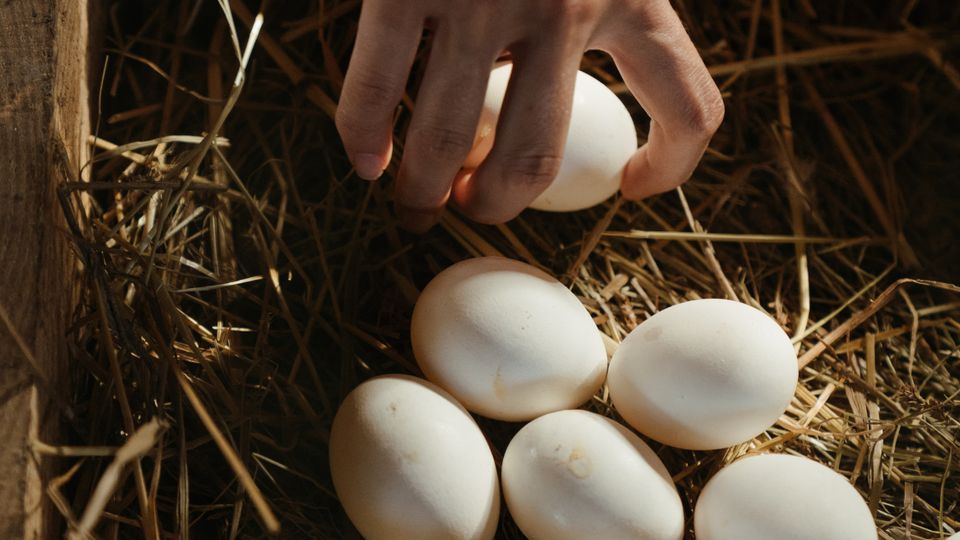
Hand collecting eggs from a nest box.
What the culls were eating
A hen out of lay eats nearly as much as a hen in lay. Work the saving with your own figures. The numbers below are an example.
Flock: 1,000 hens at 60 weeks, collecting 780 eggs a day. Hen-day production is 78%.
A culling pass finds 60 non-layers.
Each eats about 115 grams a day. Sixty eat 6.9 kg a day, or 207 kg in a 30-day month.
That is a little over four 50 kg bags. If a bag costs GH₵ 400, as an example, the saving is about GH₵ 1,650 a month.
The egg count stays at 780, now from 940 hens, so the laying percentage rises from 78% to 83%. No hen is laying better. You have simply stopped paying for sixty that were not laying at all, and you have their sale value in hand as well. The remaining birds gain feeder space and, on litter, floor space. How to work the percentage and your break-even point is explained in how to raise your laying percentage, and you can test different flock sizes and prices in the poultry profit calculator.
Culling does not repair a management fault. If non-layers keep appearing in large numbers, the flock is being pushed out of lay by underfeeding, heat, parasites or disease. Removing the victims every month treats the result and leaves the cause in the house.
What to do with culled hens
Healthy culls are sold live as spent layers. There is steady demand from households, chop bars and market traders, because the meat gives a strong flavour to soups and stews. Prices are usually best in the weeks before Christmas, Easter and Eid, so if a routine pass falls near a festival, time it to suit. Sell by weight or grade the birds into two sizes so that the heavier ones are not given away at the price of the light ones. Do not hold culls back to fatten them. They convert feed poorly and every extra week reduces the saving.
If the flock has had any medicine, read the label for the withdrawal period for meat and keep the birds until it has passed. Ask your vet if the label is unclear.
Sick, wasted or swollen birds are not for sale or for the pot. Kill them humanely and bury them deep or burn them, away from the houses and the water source. If several look alike, show them to a vet or the district veterinary office before you dispose of them, because they are telling you something about the flock.
Buyers and their crates are a disease risk. Crates that have been through a live-bird market should not come into the house. Carry the hens to the gate in your own crates and transfer them there. If you dress culls for sale, the hygiene steps in slaughtering and dressing broilers on a small farm apply to hens too.
Plan the replacements before the house empties
Culled hens should not be replaced by dropping young pullets into the old flock. Mixed ages pass disease from old to young, and newcomers are bullied off the feed. Keep the old flock as one group to the end and bring the next flock into a cleaned, rested house.
That needs planning. Day-old layer chicks take about 18 to 20 weeks to lay their first eggs and several more to reach peak, so the order has to be placed around five to six months before the old hens leave. For replacements, Halaal Farms Ghana supplies day-old layer chicks from GH₵ 23 each (checked 2 October 2026, and prices change), vaccinated at the hatchery, as well as point-of-lay pullets for farmers who need eggs sooner. The trade-off between the two is worked through in point-of-lay pullets or day-old chicks.
To book a hatch date or to talk through a flock that has too many passengers, call 024 915 1503 or send the order form. The advice costs nothing, and the other starting prices are on the price list.
Questions farmers ask
At what age should a laying flock be sold off as spent hens?
Many farms sell at 72 to 80 weeks, but age is a poor rule on its own. Sell when weekly egg income no longer covers feed and running costs with a margin, or when cracked and rejected eggs are climbing. A healthy flock that was culled lightly along the way can stay profitable for longer, especially when egg prices are high.
Can a hen that has stopped laying start again?
Yes, if the cause is temporary. Hens that stop because of a moult, a spell of heat, a break in feed or water, or a fright usually return to lay within a few weeks once conditions are corrected. Hens that stop because of internal laying, tumours, a damaged oviduct or excess fat rarely return. A week in a test pen separates the two groups.
How can I spot non-layers without handling every hen?
Watch the flock in mid-morning. Hens in lay have big red combs, visit the nests and feed busily. Hens with small pale combs that stay on the perch or idle in corners are suspects. In cages, note the cells whose egg trays are short for several days running. Mark the suspects, then handle only those birds after dark.
Is the meat of culled layers good to eat?
Meat from healthy spent hens is safe and is well liked in Ghana for soups and stews because of its strong flavour. It is tougher than broiler meat and needs longer cooking. Do not eat or sell hens that are sick, very thin or swollen in the abdomen, and observe the withdrawal period on the label of any medicine the flock has received.
Written by the Halaal Farms Ghana team. We hatch and import day-old chicks at Opeikuma, Kasoa, and deliver to all 16 regions. This article is general guidance for farmers. For diagnosis and treatment of sick birds, speak to a vet or your district veterinary office.
Follow the egg from the nest to the buyer: a collection timetable, nest management, what to do with dirty eggs, grading by quality and size, storage in hot weather and transport without breakages.
Feathers on the floor and fewer eggs in the trays usually mean an older flock is moulting. Here is how to confirm it, feed through it and decide whether a second laying cycle pays.
Blood on one hen can turn into a pen-wide habit within days. This guide gives the emergency steps, explains each trigger in a Ghanaian open-sided house and sets out prevention from the brooder onwards.